Guides › Records & IDs
Police record overview
Getting a Jamaican police record: what to know before you apply
A police record has stricter rules than most documents. One name mismatch or the wrong kind of photo, and you’re sent out of the line. Here’s what the Criminal Records Office checks, which route fits you, and how to get one without flying home.

At a glance
- Who it’s for
- Anyone who needs a Jamaican police record for work, travel or immigration, in Jamaica or overseas
- Speed and JCF fee
- Regular, 21 working days: J$3,000
- Express, 5 working days: J$6,000
- Next day, Kingston only: J$8,000
- Living overseas?
- No need to fly home. Your fingerprints are taken where you live.
Which route are you on?
Where you live and who is asking for the record decide what’s involved.
Applying in Jamaica
You attend fingerprinting in person at one of the JCF’s stations.
Living overseas
Your fingerprints are taken by police where you live, and the application is handled in Jamaica.
For a foreign government
Immigration, visas and overseas jobs usually also need an apostille from the Ministry of Foreign Affairs before the record leaves Jamaica.
Your name has changed
You apply under the name on your photo ID, not your new name, until your ID is updated.
Know this first
One certificate, one recipient
Your certificate is locked to the embassy or employer you name, and can’t be reused for anyone else. Confirm who is asking for it before you apply.
Plan for the whole timeline
From overseas, add the apostille and courier time on top of the JCF’s processing time.
Next-day service is offered in Kingston only, when the JCF has capacity.
What the Criminal Records Office looks at
These are the things your application is checked against.
- Your nameIt must match your photo ID exactly, middle name included.
- Your photo IDValid and government-issued. For immigration, usually your passport.
- Your photoA professional passport-size photo, never certified or stamped by a JP.
- Your fingerprintsTaken in person, in Jamaica or by police where you live.
- PaymentThe right fee for the speed you choose.
Where people get stuck
Most people are turned away for small things they couldn’t have known.
- The name doesn’t match the IDA missing middle name, or a married name the ID doesn’t show yet.
- A certified photoA habit from passports. A JP stamp on a police record photo means new photos.
- The wrong recipientThe certificate can’t be reused, so a mistake means paying again.
- A fingerprint card that isn’t acceptedFrom overseas, you only find out after it’s been posted to Jamaica.
From overseas, every mistake costs another round of courier fees and weeks of waiting. That’s why your fingerprint card is checked before you send it.
The complete guide
Requirements, fees, processing times and overseas applications
The overview above gives you the short version. Below is everything in detail, whether you’re applying in Jamaica or from abroad.
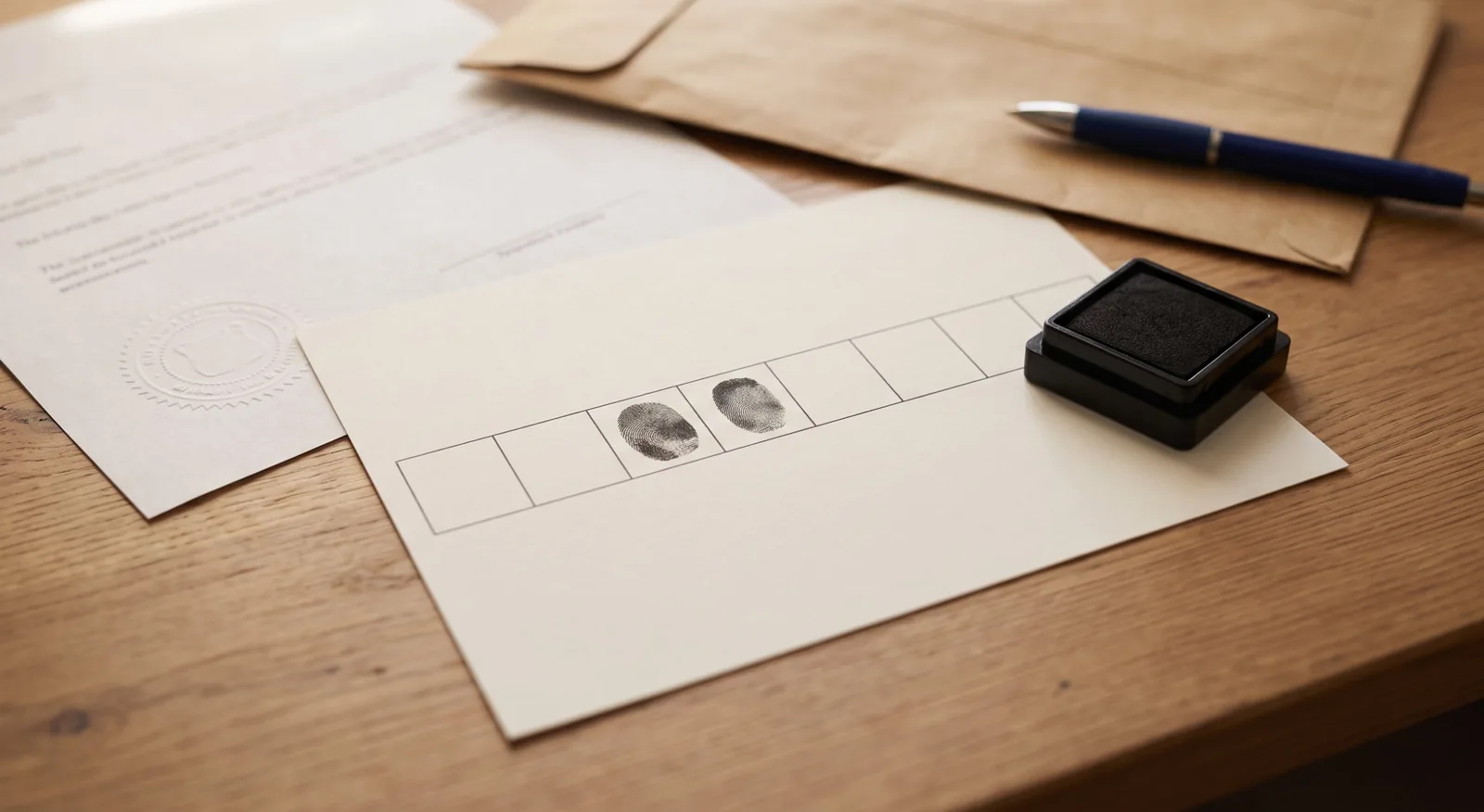
What is a Jamaican police record?
A Jamaican police record (also called a police certificate or criminal clearance certificate) is issued by the Jamaica Constabulary Force (JCF) through its Criminal Records Office. It is commonly requested for:
- Overseas jobs and work permits
- Immigration, permanent residence and visa applications
- Professional or educational opportunities
- Employer background checks
Before you apply
Ask the organisation requesting it exactly who the certificate should be for, how it should be delivered, and whether it needs an apostille. Your application must name the requesting organisation.
How much does a Jamaican police record cost?
| Service | Government fee | Processing time |
|---|---|---|
| Regular | J$3,000 | 21 working days |
| Express | J$6,000 | 5 working days, starting after fingerprinting |
| Next-day | J$8,000 | Temporarily suspended |
Don’t pay for next-day service unless the Criminal Records Office confirms it is available again. Processing times are estimates, not guarantees, and weekends and public holidays don’t count.
Receipts are generally non-refundable, so check your details and chosen service before paying.
What documents do you need?
Valid government-issued photo ID
A passport, national ID or driver’s licence. If the record is for overseas or travel purposes, the JCF requires a valid passport.
Passport-sized photographs
The JCF asks for one or two photos. We recommend bringing two to be safe. They must not be certified or embossed. This is different from passport and TRN applications, where a Justice of the Peace often signs the photos.
Your TRN and payment receipt
The receipt should be in your own name.
Online application and appointment confirmation
After paying, you complete the application online. The confirmation email may contain details you need to print and bring to your appointment.
How to apply in Jamaica
Step 1: Pay the government fee
Pay through an accepted Tax Administration Jamaica (TAJ) payment channel, following the JCF’s current instructions. Keep your receipt.
Step 2: Complete the online application
Use the JCF’s Police Certificate Application Management System on the official JCF website. Enter your details carefully, including the organisation requesting your record. You may need to upload your photo, receipt and ID.
Step 3: Book your fingerprinting appointment
Choose an available date and location online, then check your email for the confirmation.
Step 4: Attend your appointment
Go in person with your receipt, printed application, photographs and valid ID. Your name on the application must match your ID exactly, including all middle names.
Step 5: Wait for processing
Keep your application reference and watch for any messages from the JCF. If you have a deadline, allow extra time.
Step 6: Collect your certificate
Your pickup location depends on where you were fingerprinted. Certificates must be collected within three months. If someone else collects for you, they need a letter of authorisation and valid ID.
Fingerprinting locations
- Kingston: 56 Duke Street
- St. James: Summit Police Station
- St. Mary: Area 2 Police Headquarters, Pompano Bay
- Clarendon: May Pen
Confirm the address and collection arrangements in the online booking system before you travel.
Applying from overseas
You don’t need to fly home. Overseas applicants can have their fingerprints taken where they live.
Step 1: Get your fingerprints taken
Use your local police or a reputable fingerprinting agency. The JCF needs a full set of prints with the agency’s stamp and the name of the person who took them. Confirm the format first, because cards that don’t meet requirements cause delays.
Step 2: Prepare your passport copy and photos
You’ll usually need a certified copy of your passport’s photo page and recent passport photos that are not signed or sealed. Don’t send your original passport unless you are told to.
Step 3: Complete the application and pay
Follow the current overseas instructions. Payment options can differ depending on whether you have a TRN. The overseas process is not identical to the local online one.
Step 4: Arrange submission and collection
If someone in Jamaica is submitting or collecting for you, check whether their letter of authorisation must be certified or notarised.
Step 5: Arrange delivery
Confirm how the finished certificate will reach you. A prepaid return courier envelope may be required. Keep your tracking details.
Overseas applications take longer than the 21 or 5 working days, because of fingerprinting, postage, collection and delivery. Add more time if you also need an apostille.
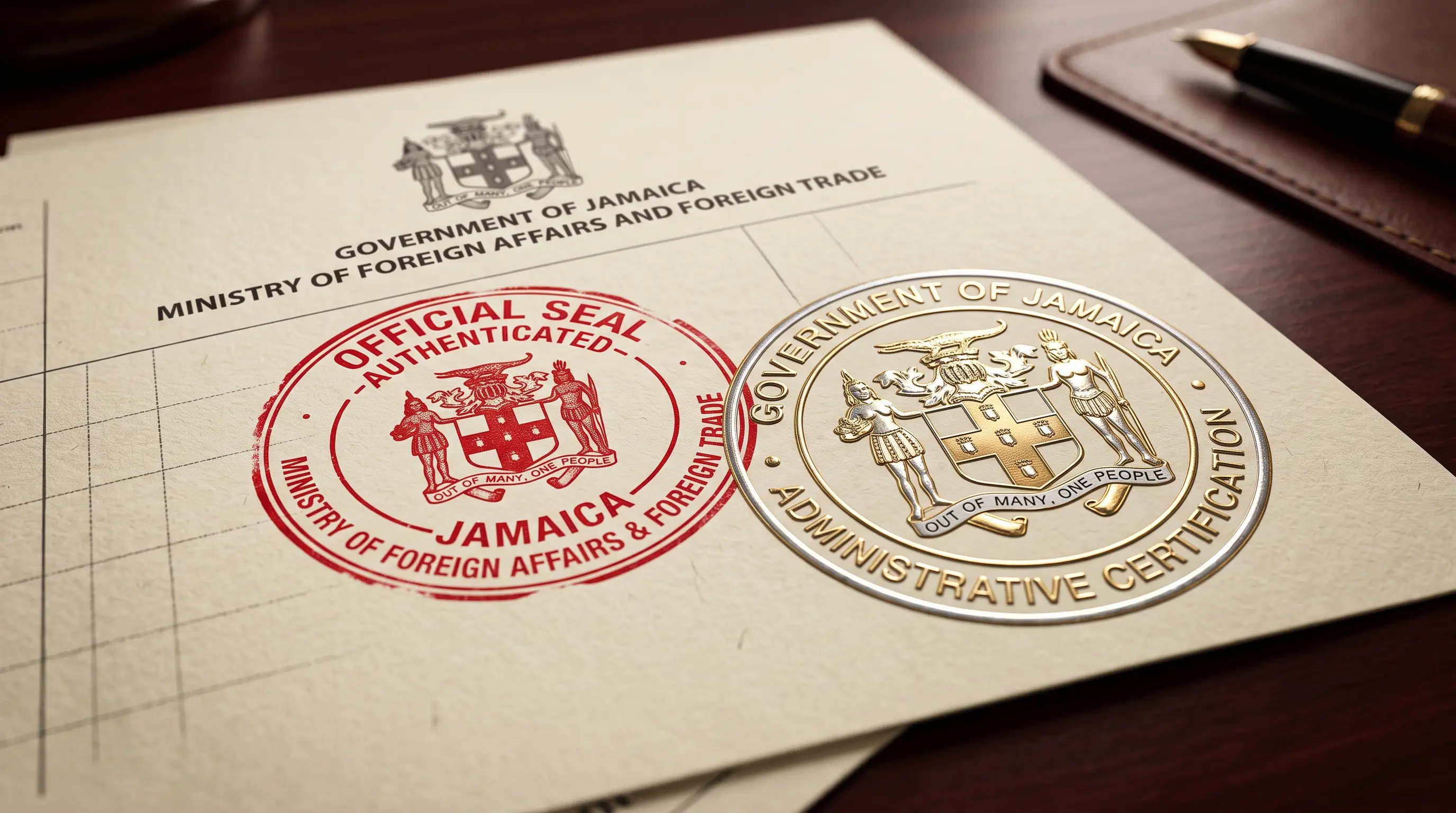
Do you need an apostille?
An apostille confirms that a Jamaican public document is genuine so it can be used in another country that is part of the Hague Apostille Convention. Whether you need one depends on the country and organisation requesting your record, so ask them first.
Jamaica’s Ministry of Foreign Affairs and Foreign Trade issues apostilles. The Ministry’s fees are:
- J$3,500 per document for standard service (5 business days)
- J$5,000 per document for 24-hour rush service, where eligible
These are separate from the police record fee and don’t include courier costs.
Common mistakes that cause delays
- Name doesn’t match your ID. “Andrew Clarke” on the form and “Andrew Marcus Clarke” on the ID can cause problems. If your name changed but your ID wasn’t updated, ask the JCF what to do before applying.
- Certified photos. Photos signed, stamped or embossed by a Justice of the Peace may be rejected. Tell the photographer they’re for a police record.
- Wrong recipient. Confirm the exact organisation details. Don’t assume one certificate can be reused for another employer or embassy.
- Paying before checking. Confirm your ID, photos and recipient first.
- Not allowing enough time. Plan backwards from your deadline, including collection, apostille and shipping.
Before you apply: quick checklist
- I know who is requesting the record and how they want it
- My name on the application matches my photo ID exactly
- I have two uncertified, unembossed passport photos
- I have my TRN
- I’ve chosen an available service and kept my receipt
- I’ve completed the online application and booked my appointment
- I know where to collect my certificate
- Overseas: I’ve checked fingerprint, authorisation and delivery requirements
- I know whether I need an apostille
Frequently asked questions
How much is a Jamaican police record?
J$3,000 for regular service and J$6,000 for express. Next-day service (J$8,000) is temporarily suspended.
Do I need to go in person?
In Jamaica, yes, for fingerprinting. Overseas applicants can have fingerprints taken where they live.
Can someone collect my police record for me?
Yes, with a letter of authorisation and their valid ID.
Can I use one police record for more than one employer?
Don’t assume so. Check with each recipient and the JCF before applying.
Do I need an apostille?
Not always. It depends on the destination country and the organisation requesting it.
What if my name has changed?
Your application must match your ID. If your ID hasn’t been updated, ask the JCF which documents they will accept.
Final thoughts
Confirm who needs your police record, check that your name matches your ID, use uncertified photos, and allow enough time for processing and delivery. For official instructions, visit the JCF’s police certificate page.
Government fees and our service fee are separate. Laura Clarke Administrative Services is independent and not affiliated with the JCF, TAJ, the Ministry of Foreign Affairs and Foreign Trade or the Government of Jamaica. You may apply directly to the government agency.
No need to fly home
Overseas, you get fingerprinted where you live and we handle the Jamaica side, then send your certificate back by DHL. Apostille available if you need it. In Jamaica, we prepare your application, pay the fee and book your appointment, so you only attend fingerprinting.
See the police record service → All servicesFees last checked . The JCF can change them without notice.